

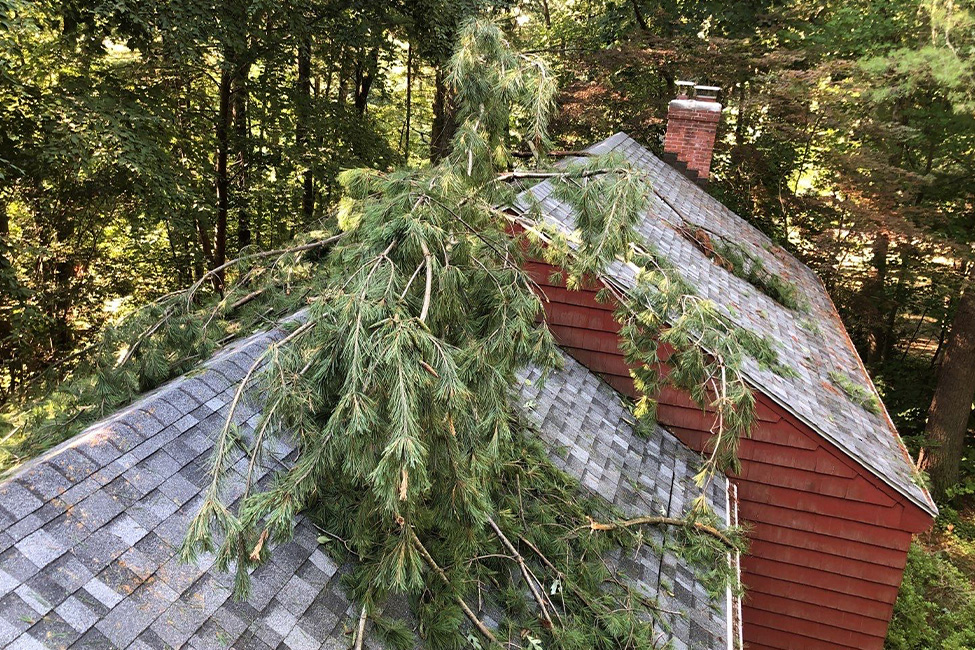
When mid winter storms hit Connecticut they never show up politely. The wind howls across yards, the snow comes in sideways and the cold settles deep into the house in a way that makes everything feel a little too still. Homeowners look outside the next morning and see the same familiar blanket of snow sitting on the roof and everything seems calm again. But that quiet scene tricks people every year because the real trouble with mid winter storms is not the storm itself. It is what the storm leaves behind and how that damage hides all the way through the cold season until spring finally exposes it.
This is the part homeowners usually do not realize. Mid winter storms do not always tear shingles off or cause dramatic leaks right away. The damage is slower and quieter and it often sits right under the surface where you cannot see it. The freeze thaw cycle gets involved, the wind pulls at shingles you cannot see from the yard and the melting snow sends water into places you did not know existed. Then everything freezes again and traps the problem until warmer days return and suddenly a stain appears on your ceiling and you have no idea where it came from.
Let’s walk through what happens during these storms because once you understand where the hidden damage likes to hide you have a much better chance of staying ahead of it.
Storm Winds Lift Shingles in Ways That Are Hard to See
One of the first things that happens in a mid winter storm is shingle lift. Not the dramatic kind where shingles blow across the street. The subtle kind where the wind gets underneath the edge of a shingle and breaks the seal without actually pulling it off. From the ground the roof still looks fine. The shingles are still in place. But the seal that keeps water out is gone.
Once the seal is broken, melted snow slides under the shingle even if it barely moves. That water then freezes at night and expands which pushes the shingle upward even more. By the time spring comes that tiny lifted edge is wide enough for water to travel directly to the decking. Homeowners often say the same thing in April. “Everything looked fine all winter so I don’t understand why the roof is leaking now.” This is usually why.
Ice Expands Tiny Cracks Until They Become Real Problems
Mid winter storms create the perfect setup for freeze thaw damage. Snow melts during the day especially when sunlight hits the roof after a storm then temperatures drop sharply at night and everything freezes again. If the roof already has a tiny crack or a nail slightly backed out the water moves into that spot and freezes overnight. Ice expands as it freezes which widens the crack just a little. Then it melts again the next day and refreezes that night and the cycle repeats for weeks.
By the end of winter what started as a hairline crack has grown enough to let water reach the attic. The homeowner does not see anything until spring rain arrives and suddenly the ceiling begins to show a small damp spot that turns into a stain.
Snow Load Hides Structural Stress
Mid winter storms often dump heavy wet snow that stays on the roof for long periods because temperatures remain too cold to melt it off. That weight presses down on the roof deck and can cause slight sagging in older homes. The sagging itself may not be noticeable but what it does to the shingles and the flashing around the sagged area is where the hidden damage begins.
When the roof bows even slightly the shingles stretch and shift. Flashing loosens in small sections and water follows those shifts without ever giving a visible warning. Once spring arrives and the snow finally melts off the roof you can often see the resulting dips or uneven lines on roofs that handled too much weight through the season.
Ice Dams Hide Water That Slips Under the Roof
Ice dams are one of the most common forms of hidden damage from mid winter storms. Snow melts near the top of the roof and freezes again at the lower edge creating a ridge that traps more water behind it. That water has nowhere to go so it works its way under the shingles.
The roof may not leak right away because everything is frozen. The water sits between the layers and freezes again each night and eventually works deeper into the structure. By the time spring warms everything the water that was trapped for weeks begins to show itself. This is why so many homeowners experience leaks in March and April instead of January.
Attic Moisture and Condensation Build Up Quietly
Mid winter storms cause temperature swings that affect the attic in big ways. Warm indoor air escapes into the attic through tiny gaps and meets the cold roof deck. That creates condensation and once moisture enters the insulation it loses its ability to block heat. Wet insulation becomes heavy and flattened which lets even more warm air into the attic and that warmth melts snow unevenly and feeds ice dam formation.
Meanwhile the homeowner does not see any of this because it is happening above the ceiling. They only notice the signs later like musty smells or soft spots in the drywall.
Flashing Takes a Beating During Mid Winter Storms
Flashing around chimneys, skylights and vent pipes shifts the most during storms because the wind and the freeze thaw cycle hit those areas first. Even a tiny movement in flashing creates a gap where melted snow can slide in and refreeze. Once water gets behind flashing it can travel several feet in any direction before dripping down which makes it one of the most difficult types of roof leaks to diagnose in the spring.
This is why flashing repairs are one of the most common fixes we do once winter is over.
The Roof Deck Weakens Slowly Through the Season
All winter long the roof deck is dealing with moisture cold air and shifting shingles. Even if the roof never leaks into the house the decking absorbs moisture from above and below. Repeated freezing makes the wood contract and thawing makes it expand. Over a long winter this cycle weakens the deck in places that were already worn.
Spring storms then hit the weakened areas harder and leaks begin showing up on the inside of the home even though the homeowner never saw a single drip all winter.
When to Call Rhino Back Roofing
If you are noticing stains, odd smells, uneven warmth or anything that feels different as winter starts to ease up it could be the hidden damage from mid winter storms finally showing itself. Our team has seen how winter weather moves through roofs in Connecticut Western Massachusetts and Rhode Island and we know exactly where these problems like to hide.
If you want a free inspection before the spring thaw reveals surprises call and we will go through the roof with you and make sure nothing is hiding where it should not be.